

The preliminary data released by the EU on February 10, 2022, showed that the Eurozone exported €2,877.8 billion of goods to non-EU countries, a YoY growth of 18.0%, and imported €3,192.5 billion, a YoY growth of 37.5%. As a result, the Eurozone recorded a record-high trade deficit of €314.7 billion in 2022, compared to a surplus of €116.4 billion in 2021. This change had a significant impact on the European economy and society, including the global impact of factors such as the COVID-19 pandemic and the crisis in Ukraine. In comparison, the US estimated that its exports grew by 18.4% and imports grew by 14.9% in 2022. According to the exchange rate of €1.05 per US dollar in December 2022, the Eurozone’s exports and imports reached 144.9% and 102.3% of the US’s, respectively. It is worth noting that EU trade also includes trade between Eurozone and non-Eurozone members, as well as between Eurozone members. In 2022, trade between Eurozone members reached €2,726.4 billion, a YoY growth of 24.4%, accounting for 44.9% of its total foreign trade. Thus, the Eurozone remains a significant player in the global trading system, and its supply of goods and demand for imports, as well as the overall volume and structure of its trade, are worth the attention of Chinese companies.
As a region with a higher degree of integration within the EU, the Eurozone has relatively stronger trade competitiveness. In 2022, the implementation of measures such as the Ukraine crisis and the ensuing trade sanctions fundamentally changed the external trade pattern of European countries. On the one hand, European countries tried to find new fossil energy providers to keep global oil and gas prices continuously high. On the other hand, they accelerated the transition to new energy. The EU’s exports and imports in 2022 grew by 17.9% and 41.3%, respectively, YoY, with a wider gap between the two than in the Eurozone. In terms of commodity categories, the primary product imports from non-EU countries by the EU grew by as much as 80.3% YoY in 2022, with a deficit of €647.1 billion. Among primary products, food and beverage imports increased by 26.9% YoY, raw material imports increased by 17.1% YoY, and energy imports increased by 113.6% YoY. However, in 2022, the EU also exported €180.1 billion worth of energy to non-EU countries, a YoY growth of 72.3%. This indicated that EU countries did not excessively intervene in the flow of energy trade under the challenge of energy supply and demand, and EU enterprises still seized opportunities to export for profit. Compared with primary products, the import and export growth rate of industrial manufactured goods in the EU was slightly slower. In 2022, the EU exported €2,063.0 billion of industrial manufactured goods, a YoY growth of 15.7%. The largest export categories were machinery and transportation, with exports of €945.0 billion, a YoY growth of 13.7%, and chemicals, with exports of €455.7 billion, a YoY growth of 20.5%Compared with the previous two types of goods, the scale of the goods imported by the EU is slightly smaller, but the growth rate is faster, reflecting the EU’s important position in the global industrial supply chain and its contribution to global value chain cooperation in related fields.
The country distribution of foreign trade reflects the resource endowments, industrial stages, and market supply-demand relationships of the relevant countries, and also requires a stable basis of mutual trust. With changes in the trade environment, the trade balance between the EU and its main trading partners is also continuously adjusting. Overall, in 2022, the EU’s imports and exports with its main trading partners mostly increased, even with Russia’s imports increasing by 24.3% YoY. In 2022, among the EU’s main trading partners, the countries with export amounts exceeding 100 billion euros are the United States (509.3 billion euros), China (230.3 billion euros), the United Kingdom (328.6 billion euros), and Switzerland (188 billion euros), with exports to China having the lowest growth rate at only 3.0%. EU exports to Russia decreased by 38.1% YoY. In 2022, there were more countries with imports exceeding 100 billion euros, ranked by import amount as China (626 billion euros), the United States (358.4 billion euros), the United Kingdom (218.6 billion euros), Russia (203.4 billion euros), Norway (160.7 billion euros), and Switzerland (145.2 billion euros). Among them, the EU’s imports from China increased by 32.1% YoY, but imports from Norway, the United States, the United Kingdom, and India increased even more, by 115.7%, 53.5%, 48.2%, and 45.9%, respectively.
All 27 EU countries achieved year-on-year growth in foreign trade in 2022. Among them, Germany, with the largest foreign trade volume, was 1.5737 trillion euros, accounting for 23.2% of the EU’s total. Ranked second to fifth are the Netherlands, Italy, Belgium, and France, accounting for 13.5%, 9.2%, 8.9%, and 8.6% of the EU’s foreign trade that year, respectively. The top five EU members accounted for over 60% (63.4%) of the EU’s foreign trade in 2022. From the perspective of trade balance, France still had the largest trade deficit among EU countries in 2022, and the deficit of 190.7 billion euros that year increased by 80.4 billion euros from the previous year. France’s trade deficit reached 32.5% of its total foreign trade. Italy underwent a change from a surplus of 40.3 billion euros in 2021 to a deficit of 31.0 billion euros in 2022. Slovakia and Sweden also changed from surplus to deficit, while Slovenia changed from a deficit of 200 million euros in the previous year to a trade balance. The trade balance of other EU countries did not show a directional change between surplus and deficit. It is worth noting that in 2022, although Germany’s foreign trade is still in surplus, there was a significant decrease, from 181.2 billion euros in the previous year to 79.1 billion euros, a decrease of 56.3%. In the context of generally declining trade surpluses or increasing deficits, the Netherlands and Ireland have performed more prominently. The Netherlands’ trade surplus decreased from 69.6 billion euros in 2021 to 63.9 billion euros in 2022, a decrease of 8.2%.During the same period, Ireland’s trade surplus increased from 59.3 billion euros to 64.4 billion euros. The relatively unique and advantageous industrial structures of both countries, as well as their lower dependence on external markets for primary products such as energy, are important foundations and guarantees for their foreign trade performance.
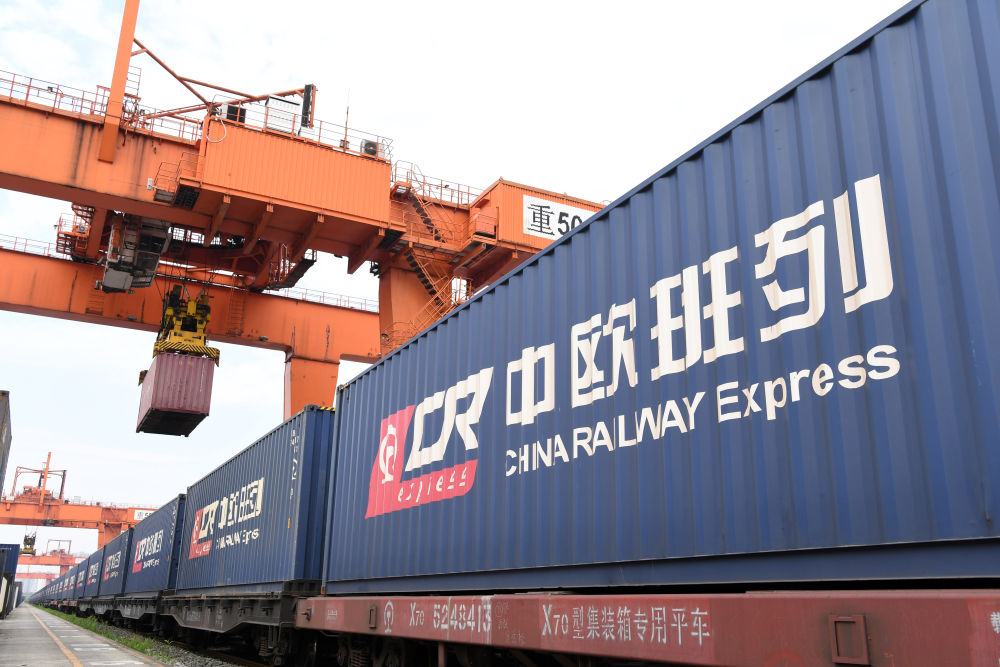
As an important trading partner, Chinese companies and EU partners have extensive complementary interests and long-term mutual connections. After three years of pandemic and various risk shocks, the economic and trade relationship between China and Europe is expected to be strengthened again in 2023. However, the economic and trade cooperation relationship cannot simply rely on demand, nor be limited to traditional trade methods. The reconstruction of global industrial and supply chains, as well as the development and upgrading of technology, provide a new environment and possibilities for China and Europe to explore rule-based economic and trade cooperation. Although Europe may still face the dual pressure of economic slowdown and inflation this year and may suffer from the impact of enterprise outflow due to adjustments in US industrial policies, the EU, as the largest and most important regional integration organization in the world, still has an important and undeniable attraction. It is beneficial for China and Europe to rely on communication to reduce misunderstandings, avoid misjudgments, and form stable cooperative relationships to accelerate post-pandemic recovery, and stable China-EU trade will also provide important support for the economic development of other major regions.